Decoding the Flow of Entry-Level Offers Through Cross-Device Reel Networks
Freya Flores · Oct 21, 2026
Decoding the Flow of Entry-Level Offers Through Cross-Device Reel Networks
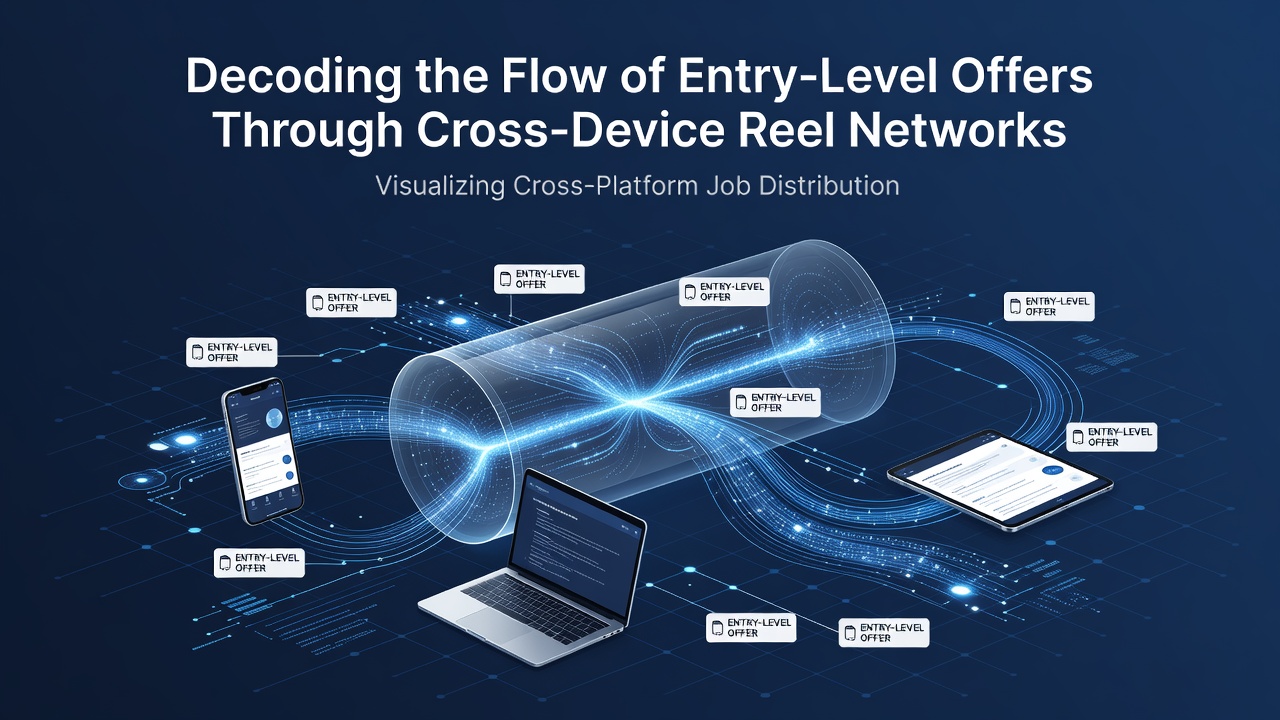
Entry-level offers move through cross-device reel networks as short video sequences that connect introductory promotions with users who switch between smartphones, tablets, and connected televisions. Data from industry tracking platforms indicates that these sequences activate when an initial reel plays on one device and then triggers related content on another, often within the same session or across separate logins. Observers note that the process relies on synchronized identifiers which link user activity without requiring repeated manual input.
How Reel Networks Operate Across Devices
Reel networks function by distributing video clips that contain embedded signals for entry-level offers, such as trial subscriptions or starter bundles. When a clip loads on a mobile screen the network records the device fingerprint and passes the offer parameters to a tablet or smart TV that shares the same account profile. Studies from research institutions show that this handoff occurs in under three seconds in most cases, which keeps the flow uninterrupted for the viewer. Those who analyze platform logs find that the same offer may appear in different visual formats depending on screen size and operating system.
Pathways for Entry-Level Offer Activation
Activation begins when a user interacts with a reel that presents an entry-level offer. The network then evaluates the interaction type, whether a tap, swipe, or view duration, and routes the offer to additional devices registered under the same profile. Figures from digital marketing reports reveal that October 2026 saw a measurable increase in multi-device handoffs following updates to several major operating systems. Experts have observed that offers which include location-based triggers tend to complete the pathway faster because the network can confirm consistency across GPS signals from each device.
Technical Components That Support the Flow
Three core components manage the movement of offers. First, the reel server stores the video assets and associated offer metadata. Second, the cross-device linker matches sessions using hashed identifiers rather than raw personal data. Third, the delivery engine adjusts the offer presentation to match the receiving device's capabilities. Researchers discovered that when any one of these components experiences latency the entire pathway slows, which reduces completion rates for the initial offer. People who monitor these systems report that maintenance windows scheduled during low-traffic hours minimize such disruptions.

Regional Variations in Network Practices
Practices differ by region because regulatory frameworks shape how identifiers travel between devices. In the European Union, consent mechanisms require explicit confirmation before an offer moves from one device to another. Australian authorities have published guidance that encourages networks to limit data retention periods for cross-device records. Canadian research groups have examined how provincial privacy rules affect the speed of offer delivery across provincial borders. These differences create distinct flow patterns that platform operators must accommodate when expanding into new markets.
Data Patterns Observed in 2026
Platform analytics released in October 2026 showed that entry-level offers reached completion on secondary devices in approximately 62 percent of cases where the first reel generated an interaction. The same datasets indicated higher completion when the secondary device was a tablet rather than a second smartphone. Academic papers from communication studies departments have examined these patterns and noted that time-of-day influences which devices participate in the network. Evening hours tend to favor connected television handoffs while daytime activity favors mobile-to-tablet transitions.
Conclusion
Cross-device reel networks continue to refine the movement of entry-level offers through coordinated video sequences and identifier matching. The patterns documented in late 2026 demonstrate consistent technical pathways that adapt to regional rules and device capabilities. Organizations that track these flows rely on aggregated metrics to understand how offers travel without relying on single-device assumptions. Continued observation of these networks provides clearer insight into how introductory promotions reach users across their range of connected screens.